Computational Art Analysis
Art historians describe how a painter's palette shifts across a career — Van Gogh brightened, Munch calmed — but these claims are rarely quantified, rarely tested against a null model, and almost never compared across artists on a common footing. This deep-learning study asks whether color dominance — how strongly a few hues rule a canvas — can turn those qualitative claims into measurable, falsifiable results, and whether the shifts it reveals across the full careers of Van Gogh and Munch line up with real biographical events better than chance.
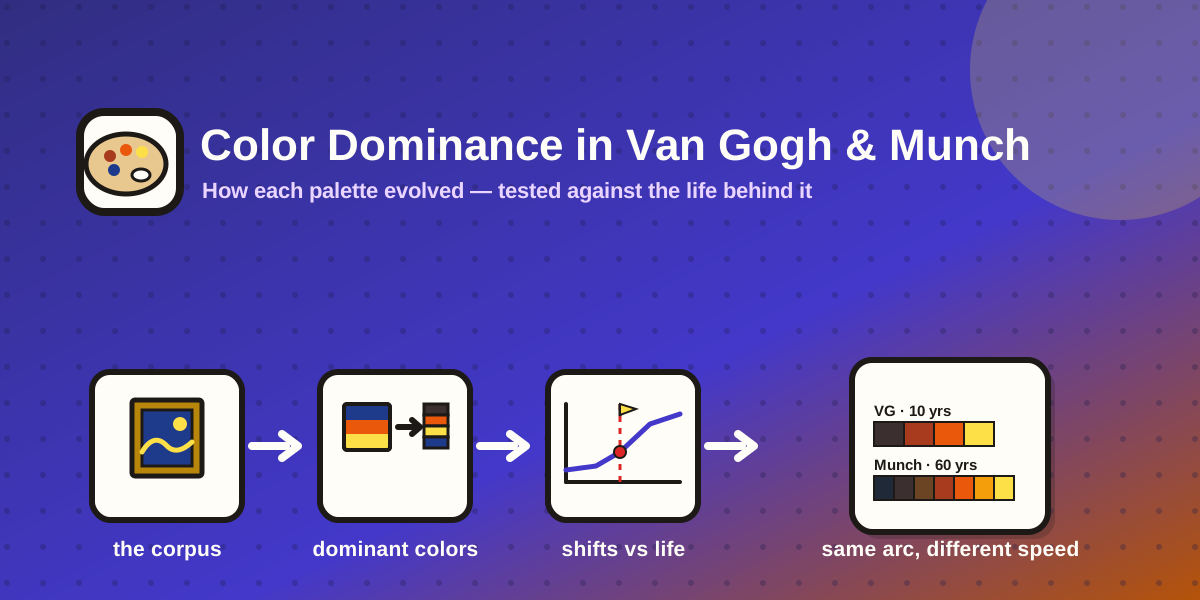
This deep-learning study treats a long-standing art-historical intuition as a testable hypothesis. Across the full careers of Van Gogh and Munch it builds per-artist trajectories of how each painter's use of color changes over time, places the two on a common, time-normalized axis so their rates of change can be compared, and tests whether the shifts it finds coincide with catalogued events in each artist's life more than chance would predict — the intuition that Van Gogh compressed into ten years what Munch spread over sixty. The framing is art-historical and heritage-oriented rather than clinical, and it is distinguished from recent single-artist work by spanning full careers and two artists on a shared footing with an explicit, tested signal. It builds on the lab's earlier multi-century color-mining work, and draws on deep learning, computational color analysis, self-supervised visual features, and rigorous statistical testing. Faculty-advised.