Wellbeing & Opportunity AI
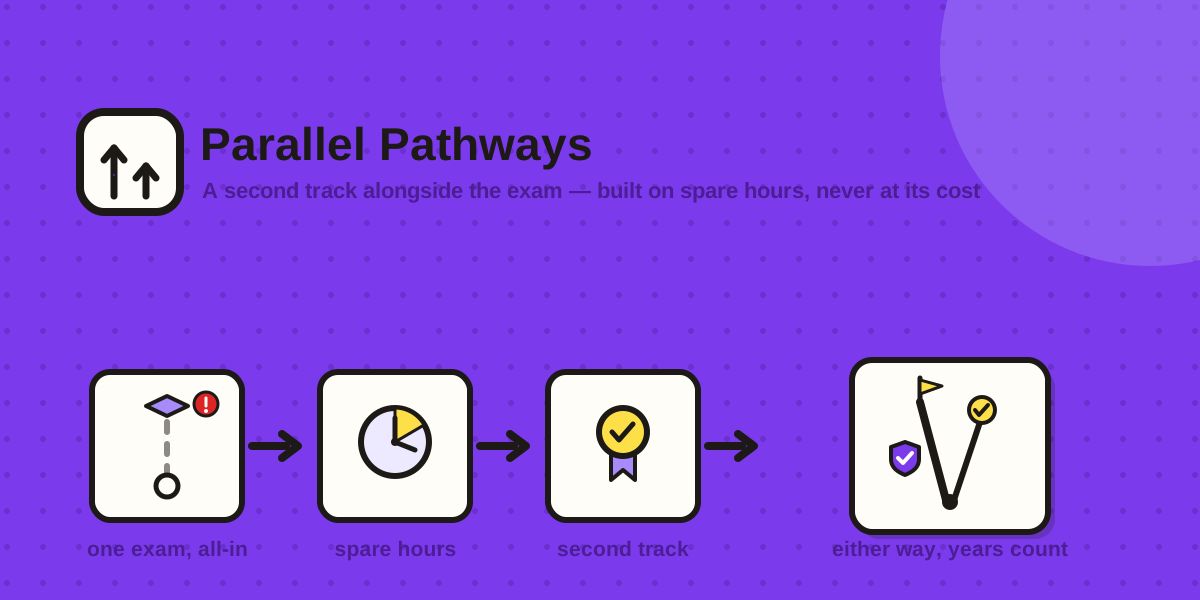
High-stakes civil-service exams — India's UPSC and comparable long-preparation exams worldwide — ask aspirants to pour years into a single, all-or-nothing outcome, with age limits and attempt caps that make each lost year irreversible, and the mental-health toll rises with every repeated attempt. This research asks whether an AI system can help an aspirant keep a second path open during those years without compromising their exam preparation — and how to tell whether such a system genuinely reduces that risk rather than simply adding a distraction.
High-stakes civil-service exam preparation — a pattern that recurs worldwide, from India's UPSC to South Korea's gosi exams, China's guokao, and Brazil's concursos públicos — is treated here as a wellbeing problem rather than a productivity one: the harm is the single-bet structure and the psychological cost it imposes as attempts accumulate against fixed age and attempt limits. This thread investigates whether an AI system can help sustain a second path alongside exam preparation without ever compromising the primary goal, and how to measure over time whether it genuinely lowers that risk rather than simply adding a distraction. It is framed throughout as decision support: exam preparation comes first, and the aspirant always stays in control of their own decisions. The work draws on goal-reengagement psychology, multiple-goal self-regulation, agentic LLM systems, human-in-the-loop design, and rigorous longitudinal evaluation. Faculty-advised.